
Chimney Sweep: Repair or Replace? How Kent Homeowners Decide
The hardest part of a chimney decision usually isn’t the repair itself. It’s figuring out whether you’re patching a symptom or buying time before a replacement that was always coming anyway. In Kent, we field this question constantly: keep what’s there, or start over? Our short answer: it depends on the condition of the core structure, not just the broken part. If the crown, masonry bond, and foundation are sound, component repairs usually make sense. If two or three of those are already failing, repairs can turn into an expensive holding pattern. Start with an honest inspection, then decide.
If you’d rather not climb up and guess, call (877) 699-0126 and we’ll arrange a real assessment.
Key Takeaways
- Repair vs. replace is a question about failure mode, not just cost.
- A cracked crown plus failed flashing turns a liner repair into the first of several.
- Kent’s frequent freeze-thaw cycles age mortar joints faster than most homeowners expect.
- Only a company that also does structural work can give you an objective recommendation.
- Every decision should start with a written inspection report you can read yourself.
- Ask how to get a second opinion without paying for a redundant inspection.
Why repair vs. replace isn’t really a price comparison
Most Kent homeowners frame the question as a dollar figure. $1,200 for a liner repair versus several thousand for a rebuild. That math looks obvious until you understand where the chimney is in its failure sequence. Every chimney fails in stages: hairline mortar cracks, then spalling brick faces, then crown cracking, then flashing separation, then water inside the flue. A repair fixes the symptom the inspector found. It doesn’t reset the clock everywhere else.
Picture a liner repair on a chimney with a crumbling crown and failed flashing. That repair buys a working flue. It doesn’t stop the water coming in through the top, which is the actual cause of most of the deterioration. In our experience, this is where homeowners return two or three times before the full replacement happens anyway. The liner is fine. The chimney around it is failing slowly.
So the framework we recommend is this: identify the failure mode, then ask whether the core structure is strong enough to justify a component repair. Repair a symptom on a healthy chimney and you’ve done the right thing. Repair a symptom on a compromised chimney and you’ve delayed the inevitable, at increasing cost.
How to assess whether the core structure is sound enough to repair
Before you commit to a repair, you need a clear answer on three things: the foundation, the masonry bond, and the crown. These are the load-bearing and water-shedding elements. If all three are solid, most component repairs (a liner patch, a flue resurfacing, a cap replacement) are worth doing. If two or three are compromised, that changes the math.
Here’s what to look for:
- Foundation. A chimney that’s visibly tilting away from the house, or one where the footing has settled and opened a gap at the roofline, is a structural issue. Repairs at the top won’t fix a moving base.
- Masonry bond. Tap a brick. If it sounds hollow or crumbles under light pressure, the bond is failing. We call this spalling. Occasional small patches are normal. Pervasive spalling across the whole face isn’t.
- Crown. The crown is the concrete cap at the top. A few hairline cracks are repairable. A crown that’s separating from the masonry, or one where pieces have broken away, is a replace-the-crown job at minimum.
If those three checks come back clean, you’re a strong candidate for targeted repair. If they don’t, a full replacement is often the less expensive path over a decade. That distinction is exactly what a written inspection should answer.
The specific repair-to-replace tipping points
Once the core structure is assessed, here’s how we think about each component in Kent. These are the fault lines where the repair-replace decision shifts.
Liners
A flue that has localized cracks or gaps is a strong candidate for repair with a specialist resurfacing system like HeatShield. This is a lasting fix for moderate deterioration. When the liner is missing, disconnected, or has failed across most of its length, replacement makes more sense. A flexible liner system like DuraFlex allows us to reline without tearing down masonry. Full relining is a larger job than a resurface; it’s still much less than a rebuild.
Crowns
A crown with minor cracking can often be repaired and resurfaced. A crown that’s failed across its span, has broken edges, or no longer sheds water away from the flue needs replacement. Replacement is straightforward and cost-effective versus letting water continue to enter and corrode the flue from the inside.
Full masonry rebuilds
This is the tipping point most homeowners dread. A full rebuild is justified when the masonry bond is broadly failing, the chimney is leaning, or the crown plus flashing plus spalling have combined to allow ongoing water intrusion. At that stage, patching one element at a time tends to cost more over five years than a single rebuild. Rebuild is also the right call if the flue is structurally unsafe and relining won’t hold.
Costs vary by scope and chimney design, but typical ranges in Kent generally run from a few hundred dollars for a cap replacement, to low four figures for liner repair or resurfacing, to low five figures for a full rebuild. Every job is priced on its own by written estimate.
What Kent’s freeze-thaw cycles do to mortar (and what to look for)
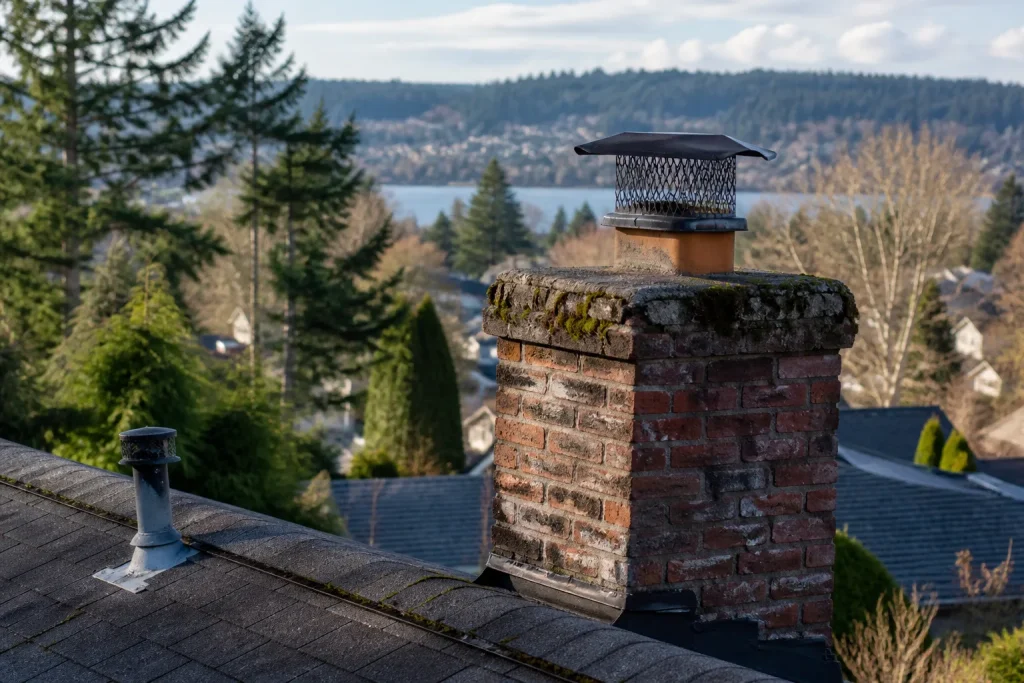
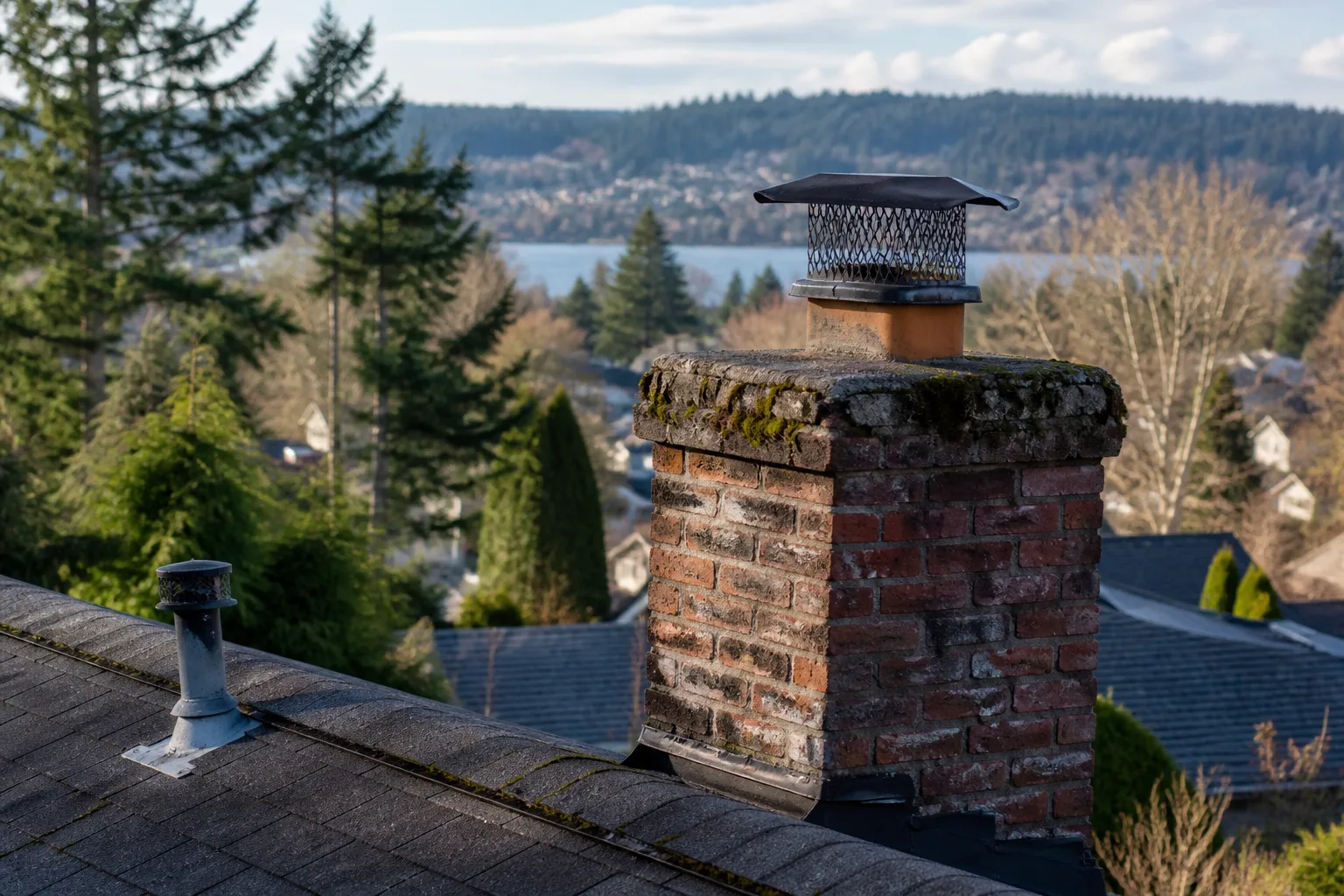
Kent doesn’t get Michigan winters or Montana cold snaps. What we get is frequent, mild freeze-thaw cycles through the winter months. That pattern is actually harder on mortar than a deep freeze that stays locked. Moisture seeps into the joints, freezes overnight, expands, then thaws the next morning. Repeat that cycle a few dozen times a season and you get what masons call freeze-thaw fatigue. It’s a slow compromise of the mortar joint, then the brick face, then the bond between them.
The visual stages usually progress like this:
- Hairline cracks at the mortar joints. Easy to miss, often dismissed as cosmetic.
- Crumbling mortar that comes away under a fingernail or a light scrape. This is where repointing is cheap.
- Spalling brick faces. The surface of the brick flakes off, exposing the softer inner core. At this point repointing alone won’t help; the brick itself is compromised.
- Leaning or separation. The chimney starts to pitch or a gap opens at the roofline. Structural intervention.
If you’re at stage one or two, mortar repair and a crown refresh usually set you back a modest amount and stop the clock. At stage three or four, patching becomes a recurring expense. And since a failing chimney cap and damaged crown are the most common entry points for water into the system, staying ahead of that water is the single most protective thing Kent homeowners can do.
Why a sweep-only company can’t give you an objective repair-or-replace opinion
A company that cleans flues but doesn’t rebuild chimneys, replace crowns, or reline them has a limited view of the decision. A sweep is an essential service and a skilled trade, but the person holding the brush may not be qualified to assess masonry bond, footing settlement, or flashing integration. That’s not a knock on sweeps. It’s just a different skill set.
An objective repair-or-replace opinion requires a company that does both. That means: chimney sweeping, chimney inspection, chimney repair, fireplace repair, and cap and crown installation, all from one team. When the company doing the inspection also does the structural repairs and the relining, the recommendation is based on what they can actually execute, not what they can refer out.
That’s why we work with professional-grade materials across the full system. DuraFlex for relining, HeatShield for flue resurfacing, and brands like Famco and Copperfield for caps and crown components. Not because brand names sell jobs on their own, but because they mean the recommendation isn’t limited by what’s in a catalogue.
What a written inspection report should contain
You should walk away with a document you can read, keep, and compare against a second opinion. Anything verbal, rushed, or photographed but never written down isn’t a report. Here’s what a proper one should include:
- Photos of every zone. Firebox, damper, flue interior, crown, flashing, cap, exterior masonry. If a camera is used, you should see the images, not just take the summary.
- Stage assessment. Where the chimney sits on the freeze-thaw progression, and where each component stands.
- Repair options, ranked. The minimal fix, the recommended fix, and the replace path, each with an approximate cost.
- The safe-to-wait list. What can honestly wait a season without risk, and what shouldn’t.
- Safety callouts. Any issue that involves fire risk or carbon monoxide risk, clearly flagged.
One more thing worth asking: whether the inspector will share their camera footage with an independent technician if you want a second opinion. Reputable companies will. And before you book a second inspection, call the first company and ask if you can share the report. Many will waive the second inspection fee if they can work from existing findings. That saves the cost of a redundant inspection, which often matters more than the cost of the repair quote itself.
When to call a pro
If you’re seeing spalling brick faces, a crown that’s cracking more each year, water staining inside the firebox, or a flue that hasn’t been inspected in a couple of seasons, get an assessment. A trained technician can tell the difference between a $200 fix and a five-figure rebuild in one visit. Our technicians have up to 9 years of experience on full chimney systems, and the local pro is licensed and insured as their state requires.
Related services in Kent: if you’re still at the routine-maintenance stage, our chimney sweep is the right first step. If you already know something’s wrong, start with chimney repair.
The Bottom Line
Repair or replace isn’t a question of dollar-for-dollar comparison. It’s a question of where your chimney sits in its failure sequence. If the foundation, masonry bond, and crown are sound, targeted repairs usually make sense and last. If two or three of those are compromised, the math flips: a string of component repairs often costs more over five to ten years than a single rebuild. In Kent’s mild but persistent freeze-thaw climate, that progression happens quietly. The mortar joints don’t fail overnight, they fail one winter at a time.
Our approach is simple. Find the failure mode. Get a written report with photos. Decide based on the core structure, not just the part that’s broken. And make sure the company giving you the verdict is also capable of executing the fix, so the recommendation isn’t shaped by what they can or can’t refer out.
Our technician experience reaches up to 9 years, and every job starts with an honest assessment before any work is quoted. If you’re in Kent and need help, Kent Chimney Sweep Pros offers free estimates at Kent Chimney Sweep Pros. Call (877) 699-0126 to schedule. We answer 24/7. Fast dispatch from 7am to 7pm, Sunday through Friday. Written estimates set the final price.
Frequently Asked Questions
A standard chimney sweep in Kent typically runs a modest amount for a single flue, based on the condition of the chimney and whether any animal nest or debris removal is needed. The written estimate sets the final price. Call (877) 699-0126 for an exact quote; estimates are free.
Not always. If the liner damage is localized (cracks, gaps, moderate deterioration), a specialist resurfacing system like HeatShield can restore it without replacement. Full replacement is usually the right call when the liner is missing, disconnected, or failed across most of its length. The deciding factor is the written inspection report, not a verbal recommendation. Call (877) 699-0126 for a quote after inspection.
For a wood-burning fireplace in regular use, once a year is standard, ideally before burning season starts. Gas fireplaces need less frequent sweeping but still benefit from an annual inspection. If you’ve skipped a couple of seasons or noticed spalling brick or a failing crown, get a full assessment rather than a sweep alone. Call (877) 699-0126 to book.
Skipping maintenance does two things. Creosote builds up inside the flue, raising the risk of a chimney fire, and small cracks in the crown or mortar joints let water in, which freezes, expands, and accelerates the damage. In Kent’s climate, that cycle is frequent enough that a skipped season can mean an earlier rebuild. A sweep and inspection now is much less expensive than a rebuild later. Call (877) 699-0126 to schedule.
Written by the team at Kent Chimney Sweep Pros.
Need Chimney Cleaning Help?
Call Kent Chimney Sweep Pros - the local pro we connect you with is licensed and insured, with free written estimates in Kent.
(877) 699-0126